|
Home > Past
and Future Conferences > ABLE 2000
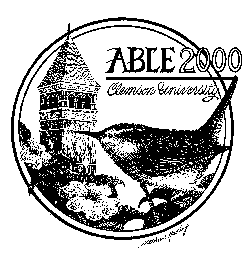
The ABLE 2000 conference logo shows Clemson landmark
Tillman Hall, the South Carolina State Bird, the Carolina wren (Thryothorus
ludovicianus), and a branch of flowering dogwood. Carolina wrens
are found as far north as southern New England and as far west as
Texas, and eat small invertebrates and some seeds. This picture
was drawn by Clemson undergraduate Nathan Hadley.
Welcome to Clemson University!
The 22nd Annual Meeting of the Association
for Biology Laboratory Education (ABLE) will be held at Clemson
University in Clemson, SC, from June 6-10, 2000.
Major conference events
The Clemson environment
Travel
Lodging and dining
Recreational facilities
Special conference events
Registration
Joining ABLE
Conference T-shirts
Major workshops
Wednesday
Thursday
Friday
Mini workshops
Tuesday field trips
Saturday field trips
Major Conference Events
Monday, June 5
ABLE Board Meeting: Jordan Room, 4 - 6 PM, 7:30 - 9 PM
Tuesday, June 6
Conference Registration: McCabe Hall Lobby, 10 AM - 3
PM
Tuesday afternoon field trips
Clemson University Genomic Institute (3 - 5 PM)
South Carolina Botanical Garden (3 - 5 PM)
Historic Pendleton (1:30 - 5:30 PM)
A Visit to Greenville (1:30 - 5:30 PM)
The Blue Ridge Foothills (1 - 5:30 PM)
Welcome Reception - Owens Pavilion on Lake Hartwell, 7 - 9 PM
Vans leave from McCabe Hall from 6:30 - 7:30 PM
Wednesday, June 7
Conference Registration: McCabe Hall Lobby, 8 - 9 AM
Major Workshops - 8:30 - 11:30 AM, Long and Jordan Halls
Box Lunch, Jordan Room, 11:30 AM - 1:30 PM
Special presentation at noon: "Map-Based Cloning in Crop Plants,
from Jointless Tomatoes to the Rice Genome" by Dr. Rod Wing,
Clemson University
Major Workshops - 1:30 - 4:30 PM
Special Event - ABLE Meets Advanced Placement Biology, 5 - 7 PM
Special Event - Two Year College Symposium, Tri-County Technical
College, after ABLE/AP event
Thursday, June 8
Major Workshops - 8:30 - 11:30 AM, Long and Jordan Halls
Box Lunch, Jordan Room, 11:30 - 1:30 PM
Special presentation at noon: "Menance, Myths, and Medicine:
The Sharks, Skates and Rays" by Dr. Bud Bodine, Clemson University
Major Workshops - 1:30 - 4:30 PM
ABLE Business Meeting 5 - 6:30 PM, Brackett Auditorium
Conference photo will be taken at start of Business Meeting
Special Event - Biologists' Night Out, after Business Meeting
Friday, June 9
Major Workshops - 8:30 - 11:30 AM, Long and Jordan Halls
Box Lunch, Jordan Room, 11:30 AM - 1:30 PM
Special presentation at noon: "From the Rainforest to the Galapagos:
A Video Adventure" by Dr. Jacqueline McLaughlin, The Pennsylvania
State University/Berks-Lehigh Valley College
Mini Workshops - 1:30 - 4:30 PM
Conference Banquet - SC Botanical Garden, 5:30 - 8 PM
Vans leave from McCabe Hall from 5 - 6:30 PM
Saturday, June 10--All-Day Field Trips
Great Smoky Mountains National Park, 8 AM - 7 PM
Greenwood Genetics Center and Park Seed Company, 8 AM - 6 PM
Biltmore Estate and Chimney Rock, 8 AM - 9 PM
Riverbanks Zoo, 9 AM - 5:30 PM
Whitewater Rafting, 8 AM - 8 PM
The City of Clemson
Clemson
is a small college town located in the foothills of the Blue
Ridge Mountains in western South Carolina. Despite its rural
immediate surroundings on the shores of Lake Hartwell, Clemson
is located in the rapidly-growing technology corridor between
Charlotte and Atlanta. The Clemson area enjoys access to large
cities (Atlanta 127 miles away and Charlotte 135 miles away),
the historic neighboring town of Pendleton (all of which
is on the National Register of Historic Places), and hiking
and camping in the Blue Ridge Mountains and nearby Great Smoky
Mountains National Park (which contains some peaks that exceed
6,500 feet). The three major local lakes—Hartwell, Keowee,
and Jocassee—are an important recreational asset, and their
2000 plus miles of shoreline give this area of South Carolina
the nickname "The Freshwater Coast."
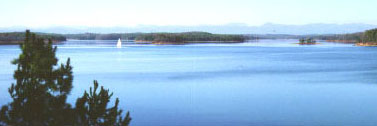
Lake Keowee
Clemson University
 Clemson
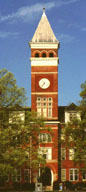
University is one of the two Land Grant Universities in South
Carolina. Although the University began in 1889 with the traditional
Land Grant emphasis on agriculture and engineering, today it offers
73 undergraduate degrees and 110 graduate degrees. The University
has about 17,000 students (14,000 undergraduate) on a 1,400 acre
campus. The host department is the Department
of Biology Instruction and Agricultural Education (DBIAE), one
of 16 departments in the College
of Agriculture, Forestry, and Life Sciences. Clemson
University is one of the two Land Grant Universities in South
Carolina. Although the University began in 1889 with the traditional
Land Grant emphasis on agriculture and engineering, today it offers
73 undergraduate degrees and 110 graduate degrees. The University
has about 17,000 students (14,000 undergraduate) on a 1,400 acre
campus. The host department is the Department
of Biology Instruction and Agricultural Education (DBIAE), one
of 16 departments in the College
of Agriculture, Forestry, and Life Sciences.
Clemson
Weather
Yes, South Carolina is hot in summer. In June, Clemson's average
daily maximum temperature is 88° F (with about 50% of all days
over 90°) and its minimum is 64° F. 35% of all days will
have some rain. Therefore, dress for warm weather, but remember
to pack appropriate clothes for whatever field trips you might take.
Travel
If you can, it would be best to get into Clemson on Tuesday (perhaps
in time to take advantage of the Tuesday afternoon field trips)
and leave on Sunday. We plan to run a shuttle to the Greenville-Spartanburg
airport especially on those two days (times to be determined by
times of arrival and departure). Leaving via our shuttle on Saturday
will be difficult because all our vans will be tied up with field
trips on Saturday. Of course, if you're not depending on our airport
shuttle, you can arrive and depart at any time.
Air Travel. The Atlanta and Charlotte airports are about
2 hours away from Clemson on I-85, and those choosing these airports
would have a rent a car. The preferred air access is through Greenville-Spartanburg
Airport (GSP), which is 45 miles from the Clemson campus. GSP
is a major airport, served by American Eagle, Comair, Continental,
Delta, Midway, Northwest, United Express, and US Airways. It handles
1.5 million passengers per year, and has 50 departures per day.
While the airport has a complete selection of rental cars (Budget,
Hertz, Avis,
National, and Thrifty)
and there is a commercial airport
shuttle service available (1-800-346-7129), our department plans
to run a free shuttle service to and from GSP using university vans.
Ground Travel. Most participants who will drive to campus
will come on I-85. If coming from the direction of Charlotte, get
off I-85 at exit 19 and take US 76 west. After 10.3 miles, turn
left on SC 93, which will take you right past the campus. If arriving
from the direction of Atlanta, get off I-85 at exit 14 and take
SC 187 north for 5.8 miles. Turn left on US 76 west. After 4.8 miles,
you will reach the SC 93 intersection described above.
Campus Shuttles. Once the participants get to the Clemson
campus, we will continue our shuttle service for specific events,
such as the banquet. A block of rooms has been reserved at the Lake
Hartwell Inn, 2.3 miles from campus and right on the lake shore.
We will run a shuttle from the Long Hall (where most of the workshops
will take place) to the motel both before the workshops begin and
at the end of the day.
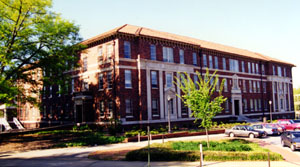
Long Hall, where many workshops will be held
Parking (in any spaces but faculty and staff spaces) is free to
workshop participants, but finding a parking space may be difficult.
For example, the closest parking to McCabe Hall is near the stadium,
down a steep hill and some distance away. We encourage participants
to rely on our shuttles and not to try to bring cars onto campus.

Azalea garden near Long Hall
Lodging and Dining
Most workshops will be held in Long Hall and Jordan Hall. Participants
electing to stay on campus will be housed in McCabe Hall, a new
dorm very close to the Student Center and within a short walk of
the workshops. Rooms are arranged in suites with two residents to
a room and two rooms (four residents) sharing one bathroom. Rooms
are carpeted and air conditioned. A room in McCabe Hall (with breakfast
provided) will cost $30 per night as a single and $19/night as a
double. There will also be a one-time linen fee of $6.50 per person.
Unfortunately, there are no motels within a comfortable walking
distance of campus. The Martin
Inn (864-654-9020) has first-class accommodations on the shores
of Lake Hartwell, but it is 1.9 miles from Long Hall. The Ramada
(864-654-7501), Sleep (864-653-6000), and Comfort Inns (864-653-3600)
are in a cluster 2 miles from Long Hall, and the Lake Hartwell and
Hampton Inns (864-653-7744) are 2 miles in another direction, but
in both cases, pedestrians would have to walk along busy highways.
Liberty Hall (864-646-7500)
is a luxurious bed and breakfast with an excellent restaurant, but
it is 4.6 miles from Long Hall, and any resident there would certainly
require a car. We have reserved a block of rooms at the Lake Hartwell
Inn (voice - 864-654-4450; fax 864-654-4451) at $59 per night. This
includes a buffet breakfast.
Dorm residents will have breakfast as a part of their lodging
fee, and all participants will receive free box lunches on all days
when workshops are running (Wednesday-Friday) and on Saturday field
trips. As for suppers, we will offer free heavy hors d'oeuvres at
the Welcome Reception on Tuesday, on Thursday we will visit area
restaurants for "Biologists' Night Out," on Friday we will have
the banquet, and some Saturday field trips also include supper.
Several inexpensive downtown restaurants (e.g., Subway) are within
easy walking distance of the campus. A wider variety of restaurants
(including two more expensive but excellent places) are about 1.3-1.5
miles from Long Hall.
Recreational Facilities
Fike Recreation Center has basketball, handball, and racquetball
courts, an indoor swimming and diving area, weight rooms, aerobics
classes, and a sauna. A Fike pass can be purchased for $8. The Walker
Course is an 18-hole, championship golf course near the Martin Inn.
Beach areas are also available on the shores of Lake Hartwell.
Special Conference Events
Reception. In keeping with the "Freshwater Coast" nickname
for this part of South Carolina, the opening reception will be held
at the Pavilion,
a new facility on the shores of Lake Hartwell and adjacent to the
Madren Conference Center and the Walker Golf Course. After the official
welcome, meet old friends and enjoy our heavy hors d'oeuvres ("Clemson
Tailgate"). The sun will set across the lake about 8:40 PM on June
6, so the participants should have a beautiful end to the gathering.
ABLE-AP Event. The Advanced Placement readers will be on
campus while ABLE is meeting, and on Wednesday evening the two groups
will meet for an evening of intellectual exchange and fun. Take
some time to learn about the AP program and participate in a simulated
AP reading. Enjoy the exchange of ideas and new approaches for teaching
labs.
Two-Year College Symposium. Tri-County Tech, a public two-year
associate-degree awarding college, is a member of the South Carolina
Technical and Comprehensive Education system. The Biology Faculty
in the University Transfer Division invite interested persons to
join them for dessert, a tour of their new biology labs and networking.
Transportation will be provided for the ten minute drive to their
campus. Topics of discussion might include: integrating new technology,
student research projects, the commuting and/or open-admission student
in the biology lab.
Biologists' Night Out. Thursday night, after the Business
Meeting, we will organize trips to Main Street in Greenville (famed
for its international restaurants) and to some of the better restaurants
in Clemson and Pendleton. Sign up after you have a look at the restaurant
menus at the meeting. These restaurant meals will be on an individual
cash basis.
Banquet. The Friday night banquet will be held in large
tents on the grounds of the South
Carolina State Botanical Garden. Enjoy acres of flowers and
woodland, nature-based sculptures, the Pioneer Garden, and short
nature trails. Tour the Hanover House, a Lowcountry plantation home
(1716) reminiscent of colonial Williamsburg. Then settle down to
eat to the country and bluegrass sound of local musician Richard
Challen.
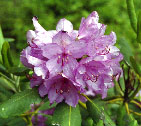
Catawba rhododendron, Smoky Mountains
Registration
You can download conference, housing, and workshop registration
forms as pdf files from here. You
must have Adobe Acrobat Reader to view or print these documents;
Acrobat reader can be downloaded from here.
Please download the registration forms, print them, and then mail
them in to the address on the forms.
Payment must accompany each registration form in order for it
to be processed. Please submit separate conference, housing, and
workshop registration forms for each participant. Payment must be
made by check or money order to Clemson University in US funds or
by VISA or MasterCard. Registration fees are as follows:
|
ABLE members |
on or before May 8 |
$180 |
|
nonmembers |
on or before May 8 |
$200 |
|
ABLE members |
after May 8 |
$205 |
|
nonmembers |
after May 8 |
$225 |
The registration fee includes the Welcome Reception, a box lunch
on Wednesday, Thursday, and Friday, workshops, workshop documents,
and refreshments at morning and afternoon breaks. It does not include
the Friday night banquet, which is a separate charge. Accompanying
persons who will not be attending workshops may register for $45;
they may attend the Welcome Reception, lunches, and refreshment
breaks.
Lab space in the workshops limits the conference to 160 participants.
Space will be assigned in the order that registration forms are
received; priority will be given to ABLE members whose dues are
paid by May 8.
Please direct registration, housing, and workshop forms and
all payments to:
Zan Wiggins
Summer Camps and Conferences
100 Madren Center Drive, Box 345671
Clemson, SC 29634
(864) 656-0595 (voice)
(864) 656-7308 (FAX)
wiggins@clemson.edu.
Inquiries about the program should be directed to:
Bob Kosinski
Department of Biology Instruction and Ag. Education
330 Long Hall
Clemson University
Clemson, SC 29634-0325
(864) 656-3830 (voice)
(864) 656-3839 (FAX)
rjksn@clemson.edu.
Joining ABLE
If you wish to join ABLE, the membership fee is $35 annually and
includes the Conference Proceedings and the newsletter Labstracts.
You may join ABLE as part of your registration fees or by contacting
the ABLE Membership Chairperson: Nancy Rosenbaum, Biology Department,
Box 208104, Yale University, New Haven, CT 06520-9104. Nancy's phone
number is (203) 432-3864, her FAX is (203) 432-3854, and her e-mail
is nancy.rosenbaum@yale.edu.
Conference T-Shirts
The ABLE 2000 Conference Logo is shown at the top of this page.
T-shirts will have the logo on the back and "ABLE 2000/Clemson University"
on the breast pocket. Shirts will cost $8, paid in advance with
your registration.
Major Workshops
Major workshops are three hours long. Each participant can select
5 major workshops, to be attended Wednesday morning, Wednesday afternoon,
Thursday morning, Thursday afternoon, and Friday morning. All morning
sessions will run from 8:30-11:30 AM, and afternoon sessions will
run from 1:30 - 4:30 PM. This year, Friday afternoon will be devoted
exclusively to mini workshops.
Wednesday, June 7
1. Preparation and Presentation of Biology Laboratory Class
Materials through WebCT
Terry L. Combs (Purdue University)
An introduction to optimizing materials for web presentation:
postscripting to PDF, animated graphics, still graphics, font type
and size. These materials, among others, will then be used to demonstrate
the creation of a WebCT course site. WebCT is a server-based course
management software application. Through a very specific (and thoroughly
yet simply explained set of steps), faculty place html, text files,
graphics files, etc. into what is essentially an on-line course.
That 'course' will allow you to place your study materials and outlines
on the web, create self-testing and scoring for individual materials,
give quizzes and exams, search your own glossary, keep an on-line
calendar that links to files or sites inside or outside your course,
keep track of grades, assign each of your students e-mail capability,
run chat rooms, publish a bulletin board, and allow you to track
students' study time and materials. All creation work and student
participation can be done wherever there is a browser and WWW access.
2. Murder and Mayhem in Non-majors Biology [online]
Jean L. Dickey and Christine Minor (Clemson University)
Who killed James Watson, keynote speaker at ABLE 2000, in the
biology lab, with the biology textbook? What dark secrets lurk
in the (fictional) pasts of ABLE members? In this non-majors laboratory
exercise, students use scientific inquiry skills to solve a murder
mystery. Many are suspects, but only one committed the crime.
Each student plays a role and tries to uncover motive and opportunity
of the other suspects. Hypotheses are tested with physical evidence:
fingerprints, blood type, and paper strip DNA analysis. We will
use a special ABLE Edition of the mystery for the workshop. Participants
will receive the generic version, suitable for adaptation to any
institution.
3. The Good and the Bad: Symbiotic Organisms from Selected
Hosts
Gayle Pittman Noblet and Michael J. Yabsley (Clemson
University)
Symbiosis is defined as one organism living on, in, or with
another organism. Three primary categories are mutualism
(both organisms benefit), commensalism (commensal benefits and
host not affected), and parasitism (parasite benefits and host
harmed). Hands-on dissection of host animals plus demonstrations
by instructors will provide examples of live symbiotes in all
three types of symbiosis: mutualism to include termite flagellates
and rumen ciliates; commensalism to include Leptomonas
flagellates in Drosophila; parasitism to include fish hosts
(monogeneans on gills, larval digeneans and acanthocephalans in
liver) and frogs (trematodes in lungs and bladder; ciliates, flagellates
and opalinids in large intestine/cloaca). Possible change in relationship
from commensalism to parasitism will be discussed relative to
demonstration of tapeworm life cycle stages in rat and beetle
hosts.
4. Koch’s Crickets: A Study in Etiology
C. Brian Odom (Wingate University)
Students will apply Koch’s Postulates in an attempt to
discover the causative agent of “Pink Plague,” a disease
that has struck a group of commercially raised crickets. During
this exercise, students will isolate the suspected pathogen from
a group of infected crickets. This organism will be characterized
and used to infect a new group of crickets in order to determine
if it can reproduce the same symptoms in this newly exposed group.
Reisolation of the suspected pathogen from this second group will
confirm this organism as the etiologic agent of “Pink Plague."
5. Using a Molecular Marker to Study Genetic Equilibrium in Drosophila
melanogaster
Rodney J. Scott (Wheaton College)
Using Polymerase Chain Reaction, genetic variation in a laboratory
population of Drosophila is characterized. The population
contains flies with two visible phenotypes, but which also differ
for a molecular marker. DNA taken from individual flies is amplified
by PCR. PCR products (either “long” or “short”)
are visualized using agarose gel electrophoresis. Three PCR “genotypes”
(long/long, long/short and short/short) are clearly distinguishable
and should be present in Hardy-Weinberg frequencies. The exercise
normally takes two sessions, but we will conduct part of the experiment
with pre-amplified DNA. A possible technique for using “hand-cycling”
PCR (with two water baths) will be described.
6. Spot Overlay Ames Test of Potential Mutagens
David R. Wessner1, Peggy C. Maiorano1,
John Kenyon1, Ralph Pillsbury2, and A. Malcolm
Campbell1 (1Department of Biology, Davidson
College, 2Davidson IB Middle School, Davidson, NC)
We have developed a cost-effective modification of the Ames
Test that allows students to investigate the mutagenic potential
of various common substances. Potential mutagens are tested against
well-characterized auxotrophic strains of Salmonella typhimurium.
By analyzing the results, students determine if any of their compounds
may be mutagenic. Follow-up experiments then are designed to determine
the dose response of these potential mutagens. Using this protocol,
we have achieved reproducible results with several known mutagens,
including sodium azide and ultraviolet irradiation. This approach
enables faculty to control costs and results in better student
understanding of mutagenesis, biochemical pathways, experimental
design, and data analysis.
Thursday, June 8
7. Bringing the Laboratory into the Lecture Hall
Ruth E. Beattie (University of Kentucky)
As part of their general education studies, all students at
the University of Kentucky must take two natural science courses.
Many non-science majors choose the biology sequence of courses.
Unfortunately these courses are lecture-only courses, and so some
students can graduate without ever having had a science laboratory
course. In an effort to provide students with some laboratory
experience, I have developed /adapted a number of laboratory activities,
which I have successfully incorporated into a non-majors biology
course (Human Ecology). These activities are carried out in a
lecture hall with 300 students in 50-minute time periods. In this
workshop, participants will experience two of these laboratory
activities: 1) Soil Testing - students test soil samples for nitrogen,
potassium, phosphate and pH, and compare the relative fertility
of different soil samples; 2) Water Pollution Testing - students
examine the effects of household chemicals on water quality.
8. The Line-Intercept Method: A Tool for Introductory Plant Ecology
Laboratories
John Cummings and Denny Smith (Clemson University)
This workshop will take participants to Bogg’s Rock, a
granitic flatrock community which is in the early seral stages
of succession. The line-intercept method of sampling will be employed
to allow the rapid characterization of the community structure.
After species composition has been defined, a simple statistical
procedure will be used to test one of several factors that might
be controlling species distribution.
9. Investigative Laboratories in Cell Biology Using a Host-Parasitoid
Model: the Tobacco Hornworm, Manduca sexa, and the braconid
wasp, Cotesia congregata
Isaure de Buron (Converse College)
A series of exercises were developed in the cell biology laboratory
using a host-parasite system: the tobacco hornworm and an inoffensive
parasitoid wasp. Exercises are fully investigative and no initial
schedule is given to the students, who after being acquainted
to the model of study, raise questions and decide as a group what
they want to investigate next (Cell morphology? Cytoskeleton?
Protein synthesis?…). This workshop involves initiation to
the system of study, phase contrast microscopy, and digital image
capturing. The numerous biological concepts that may be taught
using this system will be discussed. Funded by a CCLI-NSF grant
(DUE99-51371).
10. Mitochondria and Metabolism in Honeybee Flight Muscle
Alexander F. Motten (Duke University)
Honeybees provide a convenient source of insect flight muscle,
a tissue especially rich in mitochondria. These organelles are
easily isolated using simple laboratory equipment and their metabolic
activity readily measured colorimetrically with the dye 2,6-dichloroindophenol,
which changes from blue to colorless when reduced by the electrons
produced during respiration. This system is well suited for studying
cell fractionation, the role of oxygen in respiration, and experimental
isolation of the major subcellular components responsible for
glycolysis and the Krebs cycle. It can also be used for simple
enzymology experiments using the Krebs cycle enzyme succinic dehydrogenase.
11. Using Humans as a Central Example in Teaching Undergraduate
Biology
Martin Nickels (Illinois State University), Craig
Nelson (Indiana University) and Jean Beard (San Jose State University)
We will demonstrate three activities that illustrate human evolutionary
biology and underscore the immense pedagogical value and appeal
of emphasizing humans as a central example in college biology
courses.
(1) Using the congruence of independent biological systems
(e.g. skeletal/dental features plus DNA/protein data) to illustrate
the non-arbitrary, hierarchical nature of biological classification
(v classifying human artifacts).
(2) Using multiple lines of evidence from humans to illustrate
the immense overall strength of evidence for evolutionary theory.
(3) Using additional features of the comparative skeletal
anatomy and morphology of humans and apes in illustrating biological
classification.
12. Mitochondrial DNA from Lumbriculus variegatus: Isolation
and Restriction Digest Analysis
Gary Oxford (Longwood College)
Mitochondria will be isolated from the California blackworm,
Lumbriculus variegatus (Phylum Annelida), by homogenization
and differential centrifugation. A modified plasmid miniprep procedure
(alkaline lysis) will then be used to isolate DNA from these mitochondria.
Single and double enzyme restriction digests of mitochondrial
DNA (mtDNA) will analyzed by agarose gel electrophoresis. Sizes
of mtDNA restriction fragments will be estimated from gel results
and used to determine the total size of the L. variegatus
mitochondrial genome. Issues involved in creating a restriction
map of mtDNA from this organism will be discussed.
13. Birdsong Playback as a Tool for Teaching Animal Behavior
Jerry A. Waldvogel (Clemson University)
Animal behavior is often downplayed in general biology labs.
Problems include where to deal with the topic in the syllabus,
time constraints and special equipment needs, and the often unpredictable
nature of behavioral responses. Birdsong playback offers a solution
to these problems. Birdsong studies relate to several conceptual
areas of biology, they can be easily studied using desktop computers,
and they are among the most reliable behavioral responses in complex
vertebrates. This workshop will provide 1) general background
information about the physiology and behavior of birdsong, 2)
allow participants to explore the structure of birdsong using
acoustic analysis computer software, and 3) provide field experience
in the use of playback techniques.
Friday, June 9
14. An Introduction to DNA: Spectrophotometry, Degradation
and the 'Frankengel' Experiment
William Clark and Kimberley Christopher (University
of Alberta)
In this laboratory students perform three exercises as an introduction
to the basics of handling and analyzing DNA. In the first, they
expose circular plasmid, linear phage, and high molecular weight
genomic DNA samples to a variety of physical, thermal, chemical,
and enzymatic conditions that might be expected to affect DNA
integrity. The DNAs are analyzed by electrophoresis on a group
agarose gel. Second, they pour and reconstruct a "Frankengel"
(a gel containing sections with three different agarose concentrations)
on which they run a DNA ladder in order to investigate the effect
of gel pore size on DNA fragment mobility. Lastly, they perform
a UV spectrophotometric analysis of DNA from which they learn
to make purity and concentration estimates.
15. Effective Methods of Training Biology Laboratory Teaching
Assistants
Jean Dickey (Clemson University), Maggie Haag (University
of Alberta), John Cummings (Clemson University), William Glider
(University of Nebraska-Lincoln), and Louise McBain (University
of Alberta)
One of the most important factors in the success of undergraduate
biology laboratories rests with the instructors, often undergraduate
or graduate students, who teach them. This workshop is a continuation
of a workshop presented at the University of Nebraska ABLE conference.
Last year's session primarily covered TA training programs. This
workshop will focus on the theme "teaching effectively in the
lab." Topics will include preparation, organization, supervising
group work, and involving students in discussion. In addition
to offering some of our materials that you may find helpful, we
intend for the session to serve as a forum for all participants
to share their experiences and methods.
16. DNA Sequencing Used to Illustrate Mutations and Evolution
Theodore Gurney, Jr. and Russell LeMon (University
of Utah) and Kathleen Nolan (St. Francis College)
This workshop is both wet lab and Internet lab. We start with
DNA from several insect and/or fish species as PCR products on
gels. (We also supply instructions for preparing DNA and PCR products.)
We extract DNA from agarose and prepare to send it to a computerized
automated sequencing facility. (No radioisotopes!) Then we work
with typical nucleotide sequence data from a facility, both four
color graphics and text. We make pairwise sequence comparisons
using the web site BLAST2 and make multi-species comparisons using
MultAlin. Comparisons reveal substitutions, insertions, and deletions.
Then we make a distance-based phylogenetic tree with GeneBee.
17. Dissecting Conditions Necessary for Plant-Pollinator Mutualisms
Mary N. Puterbaugh and Mary Blaine Prince (University
of Pittsburgh at Bradford)
In this workshop, we will use ants (considered by some to be
the"scoundrels in the pollination drama"!) to test questions about
the morphological and behavioral features that permit insects
to be good pollinators. Students are presented with the fact that
ants are abundant insects, but fewer than 20 plant species worldwide
have been documented as ant-pollinated. Students generate specific
hypotheses for the rarity of ant pollination, and design experiments
to test their hypotheses. This exercise has both a field and indoor
component so that it can be successful even if it is raining and
ants are inactive outdoors.
18. Cercariae Larvae of Digenetic Trematodes: Use in Laboratory
and Field Investigations
Ron Rosen (Berea College)
Digenetic trematodes are responsible for a number of disease
conditions in humans. Study of digenean species which are non-human
pathogens provides students with safe models for an array of investigations.
In the complex life cycle of a digenetic trematode, the cercaria
larva is shed from a snail intermediate host and represents a
short-lived, aquatic transfer stage to the next host in the cycle.
Due to its temporary free-living existence (which is easily observed
with the aid of a microscope or naked eye, depending on the species
in question), the cercarial stage is ideal for a number of projects.
Initially, general methods for assessing trematode prevalence
and cercarial maturity in a natural snail population will be presented,
and participants will observe living cercariae and intramolluscan
stages (i.e., sporocysts and rediae). Teams will then conduct
two general experiments designed to assess the effect of: (1)
monochromatic light on the vertical swimming burst distance traversed
by the cercaria of Proterometra macrostoma and (2) pH and
pepsin on the emergence of the P. macrostoma distome (pre-adult)
from its cercarial tail. The latter study represents an in
vitro simulation of what naturally occurs in the stomach of
a centrarchid fish definitive host.
19. Plant Reproductive Systems: An Investigative Approach
Laura K. Thompson (Furman University)
This plant evolution exercise endeavors to move away from a
purely observational approach to one of investigation. Students
investigate the increasing use of air and animals for gamete and
population dispersal that aided plant development on land. The
first part deals with a common woodland fern of the order Filicales.
Students examine sprorophyte and gametophyte plants, and experiment
with air-borne spore release. The second part has two main objectives
dealing with the reproductive structures of angiosperms. First,
students learn to recognize flower structures and variation in
structural patterns. Second, students observe how floral structure
and pollen size differs in relation to two agents of pollination,
wind and insects.
Mini Workshops
Mini workshops are either half an hour or an hour long, and will
all be offered during a 3 hour period on Friday afternoon. Each
participant can select 3-6 mini workshops; this selection is done
by signup sheets at the meeting. Abstracts of the mini workshops
appear below:
Developing Biological Board Games
William Beachly (Hastings College, Hastings NE)
Developing a working knowledge of biology in students
requires a variety of teaching modalities. One modality
that can augment the traditional laboratory is to involve small
groups of students in competitive board games designed to challenge
and engage. I will share how to develop and use three such
games: Immunopoly, Pipes & Pressures, and Where in the Brain
is the Nucleus Accumbens? These examples are primarily physiological
but the possibilities are limitless. Student feedback has
been very positive on these activities. The goal of the
workshop is to show how easily this can be done for a variety
of curricula and to brainstorm ideas for other games.
Use of Video Microscopy with Networked Computers to Promote
Collaborative Learning in Developmental Anatomy and Histology
Betty L. Black and Harold Meeks (North Carolina State
University, Raleigh NC)
A Zoology laboratory has been designed to provide hands on experience
in imaging while encouraging collaborative learning in the subjects
of Developmental Anatomy and Histology. The room contains
an instructor's computer with video stereoscope plus 10 workstations
equipped with research quality microscopes, color video cameras
and networked Macintosh computers. Laboratory exercises
require students to work in pairs to capture, label and analyze
both still images and video clips of tissues or embryos.
Networking via Timbuktu software allows students to send selected
images to one another and to share their work in formal class
presentations. Students pursuing Honor's options access
the internet to present unusual images during class discussions.
Images captured by the students are also utilized to prepare interactive
image maps in QuickTime movie format which are used on the course
web site by instructors for brief presentations and by students
for review of materials outside of the laboratory.
On-Line Manual Enhances Student Learning
Arthur L. Buikema, William Zabaronick, and Mary Alice
Schaeffer (Virginia Polytechnic Institute and State University,
Blacksburg, VA)
In 1998 the Biology Department at Virginia Tech instituted an
On-Line Biology Laboratory Manual for Freshman Biology lab classes
to enable students to prepare for laboratory exercises prior to
class. This allows more class time for doing experiments
and discussing the results and significance of experiments.
As most of our labs are two hours long, students previously only
had time to learn basic information pertaining to the lab, then
barely had time to complete our most involved labs. We had
little way to insist students read the lab beforehand, except
by quizzing them, taking up more lab time. Outside preparation
time has improved the students' background of the current topic,
so less time is used explaining basic concepts.
We include pre-quizzes on-line of material for the current week
to ensure pre-lab preparation, and a few questions from the previous
lab to reinforce retention of previous material. On-line
tutorials of the pig dissection and fungi lab are used as study
aids, allowing students to look at laboratory specimens outside
of lab class to prepare for exams. Other tutorials
give basic instruction on use of laboratory equipment. Additional
features include an interactive food web exercise and data compilation
for statistical analysis among many classes.
This on-line manual costs less than many published manuals,
and funds the computerization of the laboratories and updating
of computer systems.
Chemistry of Digestion: Construction of an Artificial Stomach
Mary Culp (Canisius College, Buffalo, NY)
Chemical digestion is the decomposition of macromolecules by
the action of enzymes. Chemical digestion begins in the mouth
and stomach, but occurs primarily in the small intestine. We
will construct a simulated stomach and duodenum using common laboratory
equipment and chemicals. This lab clearly demonstrates the effect
of a gastric enzyme, pepsin, on proteins while leaving other food
substances intact. Directions for demonstrations of other digestive
actions will be distributed—the effects of bile on fats,
the effects of lipase on fats, and the effects of saliva (amylase)
on starch (using the Benedict's test).
Using Projects to Encourage Exploration of Animal Diversity and
Educational Resources
Jean Dickey and Jeanne Leonard (Clemson University,
Clemson, SC)
We have developed a student project to encourage elementary
education majors to explore the profusion of materials that are
available for learning about life on earth. The project
and many of the resources would also be appropriate for any introductory
biology course. We have assembled a collection of lavishly illustrated
books and CD-ROMs and built a web site with links to dozens of
informative sites. Each student chooses a particular animal
to research and uses these resources, locates others, and adds
potential web links to our collection. Part of the project is
writing a report, which the student adds to a database on the
web site. With about 250 entries so far, the database is
an ever-expanding resource that our students can use once they
are teaching. In addition, each student prepares a poster
presenting his or her animal. Many of these are uniquely creative.
We will explain the project's requirements and organization and
demonstrate the web site, the resource materials, and sample posters.
The Use of Interactive Web-Based Courseware in Intro Biology
Corey Goldman (Departments of Botany and Zoology,
University of Toronto, Toronto, ON)
This hands-on workshop will introduce participants to three
interactive Web-based exercises that complement the laboratories
and lectures in intro biology at the University of Toronto. These
exercises are freely available for anyone to use via the course's
Web site. "The Evolution of Cooperation" introduces game theory
and its application to animal behaviour. "Saving the Whooping
Crane" applies principles of population growth to management of
an endangered species. In the "Optimal Foraging Game" students
learn how animals feed efficiently in patchy habitats.
These exercises use a game-based approach to teaching and include
Java applets which allow students to conduct experiments; results
that are tracked and passed to subsequent pages; the outcome of
each game being added to a class database; multiple-choice pop-up
quizzes with explanations; engaging interface and content; and
an extensive reference section for further reading.
Dispersal Cues Used by Parasitic Wasps: Photo- and Geo-taxis
and the Mated Melittobia
Judith A. Guinan (Institute of Ecology, University
of Georgia) and Robert W. Matthews (Entomology Department, University
of Georgia, Athens, GA)
At last year's (1999) ABLE conference, we examined the mating
behaviors of a parasitic wasp species, Melittobia digitata.
The next step in the life of mated females is to disperse and
find a host on which to lay their eggs. In this workshop,
we will examine the effects of two possible cues that females
may use to aid in their dispersal, namely, light and gravity.
In addition to the ease with which Melittobia can be reared and
handled, this species has the added benefit of being relatively
unstudied, which provides wonderful opportunities for enterprising
students. At the end of the workshop, we'll discuss some
ways in which students can take advantage of this fact to design
and implement simple independent study projects to further explore
aspects of Melittobia behavior.
DNA: A Kinesthetic Experience
Sandra L. Johnson (Middle Tennessee State University,
Murfreesboro, TN)
DNA is the molecule that transmits hereditary information to
subsequent generations. As is often true in the structure/function
world of modern biology, concrete experiences with the structure
of DNA can help students better understand its central role
as the self-replicating genetic material. Using elbows and
arms as parts of the nucleotide, grasping hand-to-shoulder
and palm-to-palm as different types of chemical bonds, students
synthesize a double-stranded DNA molecule, and illustrate
related concepts, like antiparallel, 5’ to 3’
synthesis, and the relative strength of chemical bonds. When
it’s all said and done, the group ends up in a ladder-like
structure similar to DNA. However, in reality the DNA molecule
is a double helix, not just a ladder. Students are challenged
to come up with a workable way to twist the model (working
individually or in groups).
Student Reviews of Scientific Literature: Opportunities to Improve
Students' Scientific Literacy and Writing Skills
Susan J. Karcher (Purdue University, West Lafayette,
IN)
As biology educators, we seek to improve students' abilities
to read scientific articles and evaluate them critically. Frequently,
we also strive to improve students' writing skills.
This mini workshop will present what has worked in a large laboratory
genetics and moleuclar biology class of 200 biology majors.
At Purdue, we have had students summarize recent scientific journal
articles related to their course. Students first email citations
of recent articles to the course instructor to get approval of
the article to be summarized. Students write a brief--one to two
paragraph--summary of the article. The articles are evaluated
by the instructor; students have an opportunity to re-work their
summaries. The summaries are then posted on the course web
site for all student to read. Students have two opportunities
to do such summaries during the semester.
Participants, please come with examples of what you have tried
and what has worked for you!
Biology Labs OnLine
Maureen Kennedy (Media Producer, Biology, Benjamin
Cummings Science)
These 10 interactive labs provide an innovative Web-based experience
to complement traditional wet lab exercises. The online labs cover
topics that students cannot study in traditional labs due to safety,
financial limitations, or time restrictions. They allow students
to obtain instant results that would take days, years, or decades
in the real world. Labs include FlyLab, EvolutionLab, HemoglobinLab,
DemographyLab and TranslationLab. Developed through a unique partnership
between Benjamin Cummings and the California State University,
the labs are scalable across the curriculum and are appropriate
for general biology, genetics, cell biology, and ecology courses.
Rearing of Xenopus Life History Stages
Ron Koss and Bruce Wakeford (University of Alberta,
Edmonton, Alberta)
The African clawed frog, Xenopus laevis, has been
utilized extensively in teaching and research. Adults are
capable of surviving a broad range of artificial water conditions,
giving the impression that all the life cycle stages can be cultured
with ease. However, after applying traditional aquaculture
and dietary protocols over several years and generations, we observed
recruitment to be variable and unpredictable. Tadpoles reaching
metamorphic competence were usually stunted in terms of growth
rate and eventual size. An alternative aquaculture method,
using commercially available supplies, was developed to yield
consistent numbers of viable, robust offspring. These individuals
progressed through to metamorphosis in about one month.
The abridged time line enabled the creation of more detailed laboratory
exercises within the time constraints of a one-term undergraduate
animal development course. The rearing protocols will be presented
and available in handout form.
Introducing Inquiry in a Biology Lab for Non-majors
Phyllis S. Laine and Linda J. Heath (Xavier University,
Cincinnati, OH)
Participants will perform a guided inquiry activity. This
activity was used to introduce the process of inquiry to
students in a Biology laboratory for non-majors, including
elementary education majors. This new Biology laboratory is currently
in development with partial support from a NSF grant DUE 99-50373.
The course is organized into three phases: introduction, practice,
and performance. Students work as research teams to conduct
inquiry investigations. Their TLNB, team lab notebook, as
well as the laboratory instructions are on-line. Teams complete
three "journal articles" for the electronic class journal, JUBI,
the Journal of Biological Inquiry. The course has
been adapted from an investigative Biology lab for non-majors
at Clemson University. Information about and results of
the pilot course will be discussed.
Tackling Phylogeny in Introductory Biology Laboratories
Marianne Niedzlek-Feaver (North Carolina State U.,
Raleigh, NC)
We use a method of examining relationships in which all characters
initially have the same value. Once students are familiar
with building all possible trees using four vertebrate classes,
so only a reasonable number of trees are possible, they apply
the method to become more familiar with invertebrate phyla.
Here students only use characters they can assess, although we
give them hints through demonstrations using live material on
locomotionary trends in animals. More importantly, with
both vertebrate and invertebrates, students themselves decide
what characters to assign to the different classes and often what
certain characteristics mean. Often different tables come
up with different relationships even regarding the vertebrate
classes, because of how characters are assigned. References in
the form of CDs, short films and textbooks on natural history
and behavior are available so students can add these characteristics
if they wish. Instructors encourage debate and exploration
of reference material.
A Computer-Based Approach for Generating Standardized Student
Assessment Using a
First Year Biology Programme as a Model to Evaluate Its Effectiveness
Todd Nickle & Jeffrey Sheedy (Mount Royal College,
Calgary, AB, CANADA)
Biological Sciences education at Mount Royal College accommodates
students of a variety of backgrounds to fulfil University transfer
requirements. Our large Introduction to Biology programme
requires coordination of several instructors to administer laboratory
material to many small classes of students. To ensure consistency
of student skill evaluation and to reduce the workload on instructors,
we designed a system for creating quizzes that are presented to
students at each laboratory. In this workshop, we will demonstrate
the software we designed which generates quizzes and answer keys
on demand. The software design enables the program to handle
"data cassettes" which can be transferred across a variety of
computer platforms and which are relevant to any discipline for
which multiple choice and single word response assessment is possible.
The workshop concludes with our observations of how the software
has helped lab coordination, areas that need further investigation,
and future enhancements to our protocol.
Group Projects: The Good, the Bad, and the Ugly
Joy B. Perry (University of Wisconsin Fox Valley,
Menasha, WI)
Group projects offer students unique and valuable benefits.
However, they also may present difficult challenges to both student
and instructor. This workshop presents the evolution of group
projects in introductory level courses at the University of Wisconsin
Fox Valley, including methods of assessment. Participants will
be encouraged to offer suggestions and share their expertise in
managing group projects.
Seeing the Forest AND the Trees
Janet W. Phelps (University of WisconsinColleges,
Baraboo,WI)
For many years students in my General Botany and Introductory
Biology courses have taken field trips to a sugar maple woods
and a red oak woods. In the past neither ‘traditional
sampling’ (laying out quadrats, measuring dbh, etc.), nor
‘no sampling’ (just looking at the woods) worked
well to help these students understand that each woods is a community
controlled by certain trees, with characteristic herbs & shrubs
associated with them, and that the two areas are quite similar,
yet very different. For the past few years we have used a simple
sampling method, which seems to help the students to see the trees
as well as other plants, and gives them enough data (though primitively
collected) to compare the two areas.
I’ll describe how we do the sampling, the kind of information
we get, and discuss how the class and I go about drawing conclusions
about the two areas.
Oxygen Consumption of Aquatic Organisms
Ruthanne B. Pitkin (Shippensburg University,
Shippensburg, PA)
You will determine the oxygen consumption of an aquatic organism
using a MicroWinkler technique. The oxygen concentration in the
water is determined using a titrimetric procedure based on the
oxidizing properties of dissolved oxygen (DO). This is a standard
method but with the MicroWinkler you only need 10 ml of water.
All types of aquatic organism can be placed in closed containers
as long as you can get two 10 ml samples. To determine the
oxygen consumption, you compare the DO in a container without
an animal to a container with an animal Many different
investigations can be set up such as effects of temperature, size,
and activity. I use this in an upper level animal
physiology class.
Investigating Your Watershed: Detection of Fecal Coliform Bacteria
Karin E. Readel (University of Maryland, Baltimore
County, Baltimore, MD)
Fecal coliform bacteria, members of the family Enterobacteriaceae,
are found in the feces of warm-blooded animals, including humans.
Though not harmful themselves, large numbers of fecal coliform
bacteria have been associated with the presence of other pathogenic
organisms. These disease-causing organisms are often
very hard to detect due to their small numbers, and low survival
rate outside their host organisms. Fecal coliform bacteria,
on the other hand, can be detected very easily, and are therefore
useful indicators of contaminated water. Micrology Laboratories
has developed a simple method for fecal coliform detection called
“Coliscan EasyGel ®”. Each testing unit consists
of a specially treated petri dish and a bottle of liquid medium.
A small sample of test water is added to the media and poured
into the petri dish. Ions in the petri dish coating react with
the liquid causing it to gel completely within about 30-40 minutes.
Plates are incubated from 24-48 hours (temperature is not critical)
at which time colonies can be counted. The media contains two
dye-linked sugars that are activated through bacterial enzymes.
Fecal coliform bacteria produce both of these enzymes, resulting
in dark purplish blue colonies that can be easily distinguished
from other colonies.
Interactive Exploration of Kingdom Animalia Using the Animal
Diversity Web
Cynthia Sims Parr (University of Michigan, Ann Arbor,
MI)
Use student interest in charismatic megafauna to introduce concepts
such as Linnaean classification, life history evolution,
and phylogenetic analysis. University of Michigan Museum
of Zoology’s Animal Diversity Web (http://animaldiversity.ummz.umich.edu)
is a free multimedia website offering a natural history database
on thousands of animals, including images, sounds, and spinning
skulls (Quicktime movies). Descriptions of higher
taxonomic levels are written by systematists, while species accounts
are written by students. All information is organized hierarchically
and easily searched. This workshop will present several
ways to use the site, including inquiry-based exercises, student
authoring of species reports, and exercises critiquing web resources.
Using Student-Centered Investigative Modules to Teach a Multidisciplinary
Scientific Methods Laboratory Course to Undergraduate GER Students
John D. Usis (Youngstown State University, Youngstown,
OH)
The natural science faculty (Depts. of Biological Sciences,
Chemistry, Geology, Physical Geography, Physics & Astronomy,
and Center for Environmental Studies) developed an interdisciplinary
science laboratory experience for the non-science undergraduate.
Faculty desired that students participate in the scientific process
by investigation of natural phenomena. Five-week laboratory modules
are designed to encourage students to pose hypotheses and make
predictions about demonstrations or initial guided excercises
that present potential questions. Over the semester, students
transition from one five-week module to the next in no prearranged
sequence. Individual instructors teach their modules three times.
An interesting result of this pedagogy is that as the semester
progresses students enter a module with an increasing awareness
of how the scientific method operates. Each module ends up reinforcing
the other modules even while they are different disciplines.
The development and coordination of investigative modules and
subsequent scheduling matrices used to administer a multi-discipline
laboratory course are the primary focus of this workshop.
Connecting Teaching Lab Development with Education Research:
An Introduction
Brian White (University of Massachusetts, Boston,
MA)
There has been substantial progress in our understanding of
teaching and learning over the past several decades. Various methods
have been used to explore teaching and learning and have yielded
results that are relevant to undergraduate laboratory exercises.
This workshop will provide participants with a detailed strategy
for lab development and evaluation that incorporates the methods
and findings of education research. This strategy begins by identifying
the parts of the material that are most challenging to the students
and designing a lab exercise specifically targeted to these difficulties.
The lab exercise can then be evaluated in terms of its success
at helping the students over the previously-identified "trouble
spots." The workshop will illustrate this strategy using examples
from undergraduate labs used at UMass Boston and will provide
resources for participants to explore the literature and conduct
research on their own laboratory curriculum.
Half-Day Field
Trips—Tuesday Afternoon
All tours will leave from the front door of the conference dorm,
McCabe Hall. No Tuesday field trips offer lunch, so eat before you
leave.
1. The Clemson University
Genomics Institute
The CUGI is a state-of-the-art research facility for
sequencing and functional analysis of agriculturally important genes,
especially rice and rice blast, corn, and sorghum. Four different
centers of CUGI focus on BAC (bacterial artificial chromosome) libraries;
sequencing DNA; chromosome mapping and fingerprinting; and a powerful
bioinformatics center. The bioinformatics center analyzes sequences,
constructs maps, and develops new computational tools for genomic
research. Our tour will go through all four centers.
| 1.CUGI |
Tuesday, 3-5 PM |
Cost: free |
2. South Carolina
State Botanical Garden
The official State Botanical Garden has some 2,200 varieties
of ornamental plants. Of special interest are the azalea and camellia
trails, the wildflower, butterfly, fern and bog gardens, a xeriscape
garden, nature trails, a pioneer garden labeled in Braille, the
flower and turf display garden of bedding plants and turf grasses,
and an arboretum containing more than 1000 trees and shrubs. The
Garden has many winding trails that lead to shady retreats, and
small streams crisscross the area. The Botanical Garden will be
the site of the closing banquet.
| 2. Garden |
Tuesday, 3-5 PM |
Cost: free |
3. Historic
Pendleton
Pendleton is a charming town just four miles from the
Clemson campus, and one of the largest historical districts in the
United States. Our tour will include the beautiful town square,
historic homes and churches, and Ashtabula, a restored plantation.
The tour will be led by the Pendleton District Historical, Recreational,
and Tourism Commission.
| 3. Pendleton |
Tuesday, 1:30-5:30 PM |
Cost: $12 |
4. A Visit to Greenville
The neighboring city of Greenville is 33 miles from Clemson.
We will visit the Greenville
County Art Museum, famed for its collection of Andrew Wyeth
watercolors. Among the other artists represented in the "Southern"
collection are Thomas Sully, Washington Allston, Georgia O’Keeffe,
Edward Hopper, Thomas Hart Benton, Andy Warhol, and Jasper Johns.
Then we will travel a short distance and see the Roper
Mountain Science Center, which promotes quality K-12 science
instruction in the City of Greenville by interesting, hands-on instructional
techniques for both students and inservice teachers. We will tour
a miniature rainforest with 100 kinds of plants, see a marine "petting
aquarium," follow a short nature trail, and hear about the Center's
engaging approach to science instruction.
| 4. Greenville |
Tuesday, 1:30-5:30 PM |
Cost: $10 |
5. The Blue Ridge
Foothills
This half-day van tour will give visitors a taste of
the Blue Ridge Mountains. The tour will include Caesar's Head State
Park, with a panoramic view of the Blue Ridge Foothills; Table Rock
State Park, with mountain and lake views and a 1.9 mile guided hike
on a nature trail; and some spectacular views of Lake Keowee. Much
of the driving between points will be on the Cherokee Foothills
Scenic Highway. Wear warm-weather clothing and comfortable walking
shoes, and bring sunscreen and insect repellent.
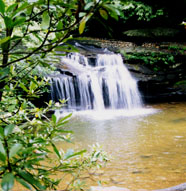
Falls on the Table Rock Nature Trail
| 5. Foothills |
Tuesday, 1-6 PM |
Cost: $10 |
Full-Day Field
Trips—Saturday
All tours will leave from the front door of the conference dorm,
McCabe Hall.
6. Biltmore
Estate and Chimney
Rock Park, NC
With 250 rooms and spectacular furnishings and artwork,
the Biltmore House was the largest private residence in America
when George Washington Vanderbilt finished it in 1895. Today the
house and 8,000 remaining acres are a museum and one of the most
popular tourist attractions in western North Carolina. We will tour
the house and formal garden. After a picnic lunch (provided) on
the Biltmore grounds, we will visit Chimney Rock, NC, 20 miles away
from the Biltmore Estate. Chimney Rock is a 315 foot granite formation
overlooking Lake Lure. On clear days the view from the top of Chimney
Rock is 75 miles. We will take an elevator to the Nature Center
at the summit, where a ranger will take us on a geological and biological
tour of the sheer cliffs, and then into a cove forest. For supper,
we will go to Larkin's on the Lake Restaurant, overlooking Lake
Lure. Larkin's has a fine restaurant upstairs (complete meals $10-$20),
and a more informal and inexpensive bar and grill downstairs (a
la carte, burgers, chicken sandwiches, etc.). Supper at Larkin's
will be on an individual, cash basis. Bring sunscreen, insect repellent,
and comfortable walking shoes.

Chimney Rock Park, Lake Lure in background
| 6. Biltmore |
Saturday, 8 AM-9 PM |
Cost: $50 |
| Note: cost includes lunch and all admission
charges, but does not include the cost of supper at
Larkin's. |
|
|
7. Great
Smoky Mountains National Park and Cherokee, NC
Great Smoky Mountains National Park (GSMNP) is an International
Biosphere Preserve and a World Heritage Site. Some of the highest
mountains east of the Mississippi shelter 4,000 plant species and
130 species of trees. Our tour will start at a restored mountaineer
homestead in a cove hardwood forest at low elevation, and then will
go (by van) to the spruce-fir forests atop Clingman's Dome (6,643
feet), the highest point on the Appalachian Trail. There will be
a half-mile hike up a steep paved road to the observation tower
on the summit. The trail has regularly-spaced benches for resting.
A ranger will tell us about the severe decline that has afflicted
the high-altitude forest due to acid rain and the balsam woolly
adelgid, an aphid-like insect. Then, after a picnic lunch (provided)
we will return to the lowlands and visit Cherokee, a tourist town
on the Cherokee
Indian Reservation. The scholars among us will visit the Museum
of the Cherokee Indian, while the rest will try their luck in Cherokee's
brand new Harrah's
Casino. We will return to Clemson in time for supper.
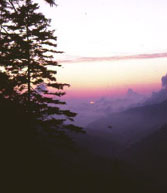
Sunset from Newfound Gap, Great Smoky Mountains
National Park
| 7. Smokies |
Saturday, 8 AM-6:30 PM |
Cost: $25 |
| Note: Cost includes picnic lunch. |
|
|
8. The Greenwood Genetics Center
and Park Seed Company
The Greenwood Genetics Center (GGC) diagnoses genetic
conditions, provides genetic counseling, and researches the causes
of genetic disease. Research centers on mental retardation and birth
defects, especially neural tube defects, uniparental disomy, and
Down's syndrome. Epidemiology of genetic defects is another area
of emphasis. Our tour will go through a diagnostic lab where we
will observe chromosome analysis and various molecular techniques,
and we will hear about GGC's approach to genetic counseling. After
eating lunch in the Old South ambience of the Inn
on the Square, we will also stop at the Park Seed Company, whose
9-acre test gardens, containing 1000 varieties of flowers and herbs,
will be at their peak of color during our visit. After the garden
tour, we will get a "behind the scenes" look at the facilities that
support this massive operation.
| 8. Greenwood |
Saturday, 8 AM-5:30 PM |
Cost: $20 |
| Note: Cost includes a buffet lunch at the Inn
on the Square in Greenwood. |
|
|
9. Riverbanks Zoo
Riverbanks Zoo, in Columbia, SC, is one of the leading
zoos of the US. It houses 2000 animals without any bars or cages.
The showpiece of the zoo is the Aquarium/Reptile Complex, which
includes displays from across the world, plus a 55,000 gallon Indo-Pacific
coral reef tank. Riverbanks also includes a 70 acre botanical garden.
After seeing Riverbanks as tourists and eating a picnic lunch (provided),
we will go behind the scenes and see backup facilities for the mammal
collection, Aquarium/Reptile Complex, and the veterinary hospital.
| 9. Riverbanks |
Saturday, 9 AM-5:30 PM |
Cost: $30 |
| Note: Cost includes picnic lunch, zoo admission,
and zoo tour fee. |
|
|
10. Whitewater Rafting on the Chattooga
River
The tumultuous beauty of the Chattooga River was introduced
to moviegoers by the film Deliverance. The Chattooga has
not only been declared a National Wild and Scenic River, but one
of the top 10 rivers in the US for whitewater rafting, and it's
only 30 miles from Clemson. We will raft Section
III, containing class II, III and IV rapids, ending with the
infamous Bull Sluice. We will be on the river 5 hours. The price
includes lunch on the river and both shower facilities and a barbecue
supper after the trip is over. Commercial guides of Wildwater,
Ltd. will assure a safe trip. The cost for rafting on a summer
weekend is high, but you can count on an authentic adventure. Bring
waterproof sunscreen, and expect to get very wet! This trip has
a limit of 30 and will fill up fast, so register early.
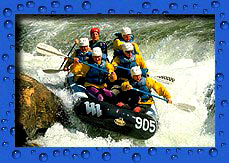
Photo coutesy of Wildwater, Ltd.
| 10. Rafting |
Saturday, 8 AM - 8 PM |
Cost: $90 |
| Note: Cost includes both lunch and supper. |
|
|
For further information about ABLE 2000...
Registration Information
Zan Wiggins
Summer Camps and Conferences
100 Madren Center Drive, Box 345671
Clemson, SC 29634
Fax: 864-656-7308
Voice: 864-656-0595
E-mail: wiggins@clemson.edu
Program Information
Bob Kosinski
Dept. of Biology Instruction and Ag Education
330 Long Hall
Clemson University
Clemson, SC 29634-0325
Voice: (864) 656-3830
Fax: (864) 656-3839
E-mail: rjksn@clemson.edu
Find out more about ABLE.
This page was last modified on 2 May 2000.
|
